
Rebekah Novak, one of our 2025-26 Conservation Interns, is currently working with our Churches of Restoration in Grand Rapids, Michigan. In this post she reflects on the challenges of and opportunities for creation care in the winter.
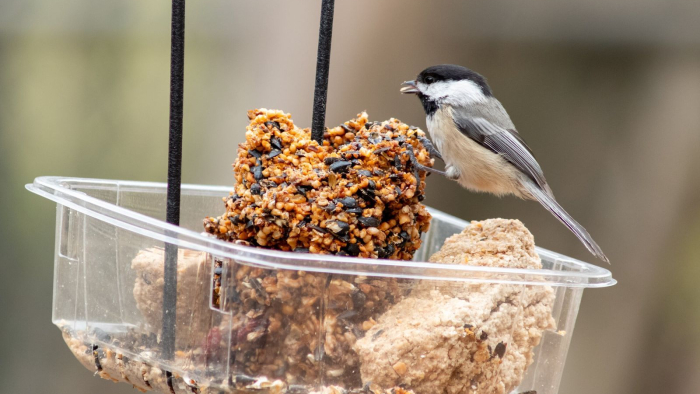
Photo caption: example of a homemade bird feeder, from Bird Buddy Tales.
If you’re like me, the middle of winter can easily make you start daydreaming of warmer weather. The cold chill of the seemingly ever-present wind seems to pierce even the thickest coat and warmest wool hat. It becomes a chore to figure out ways to enjoy being outside when the weather is less than hospitable. I find myself feeling removed from creation when I am huddled up indoors where – unlike outside – the climate can be easily controlled with the click of a button. Finding ways to care for and connect with creation in the dead of winter definitely poses a challenge.
From my bedroom window I notice small songbirds flitting around the yard. They scratch at the leaf litter blanketing the soil, hoping to find some spare seeds from months past. The Dark-eyed Juncos seem to especially enjoy the few remaining goldenrod seeds that desperately cling to the dry stem. Watching these little birds go about their business draws me closer to God’s creation. I’m reminded of Matthew 6:26: “Look at the birds of the air; they do not sow or reap or store away in barns, and yet your heavenly Father feeds them. Are you not much more valuable than they?” In that moment, my first winter creation care idea strikes me – feed the birds!
Feed the birds
I know of some hard-core birders who travel far distances to add new birds to their life list. Traveling to a new place can be exciting, yet the backyard birds we see each and every day are just as fascinating in their own way. I’m always impressed by the way birds stay cozy even when temperatures dip below freezing. According to the Fish and Wildlife Service, birds have a few different tactics to combat the cold. Just like humans, birds shiver. The shivering along with staying active helps keep their body warm.
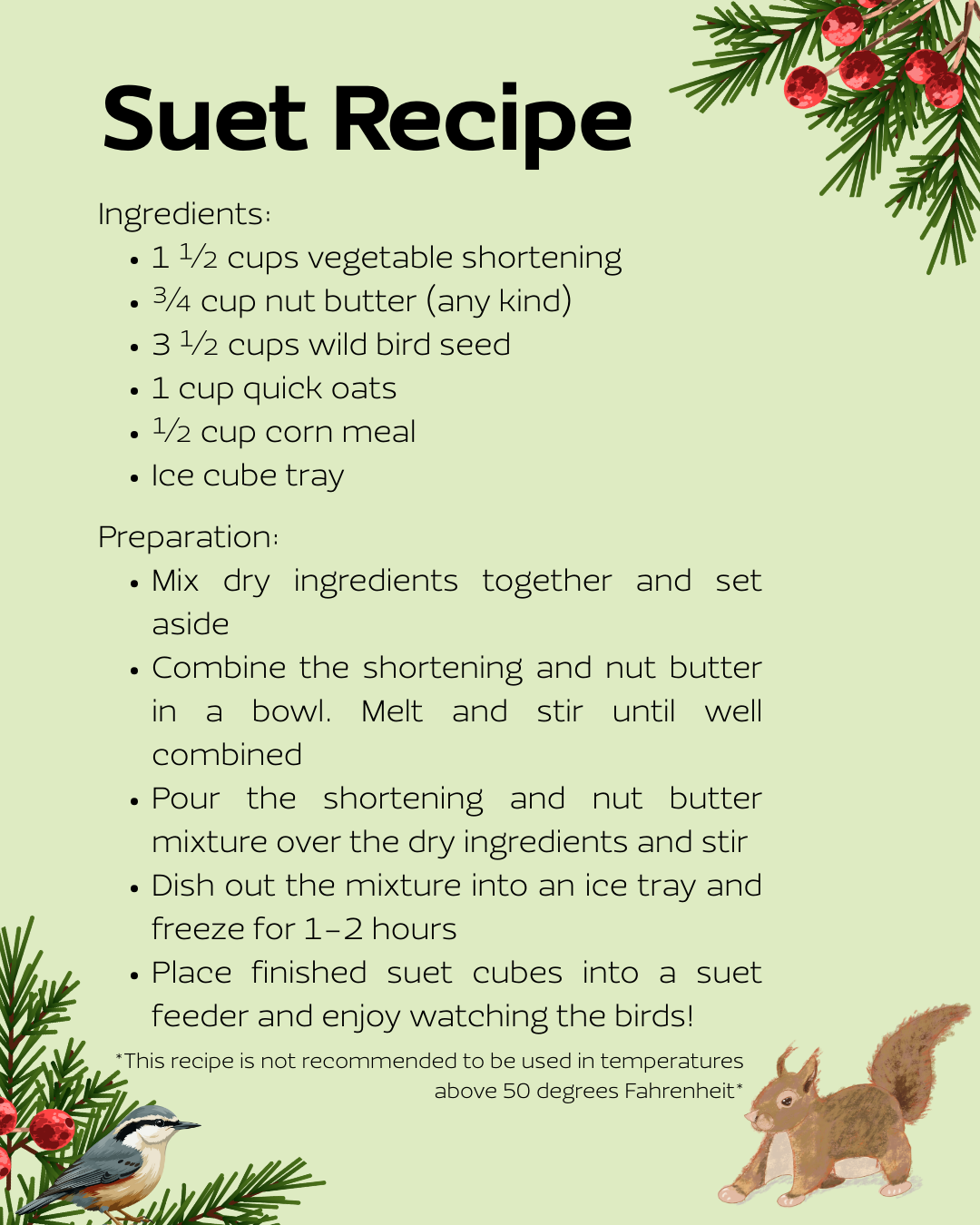
Have you ever noticed how birds look rounder in the winter too? Birds not only prepare for the cold by eating more food, but they also fluff up their feathers. The air pockets in between their feathers trap warmth. The FWS writes “The secret to maintaining these layers of air lies in having clean, dry and flexible feathers. The cleaning process, generally known as preening, depends on the species of bird. While all birds produce a special oil from a gland near the base of their tails, some cold-tolerant birds use this oil to weatherproof their feathers. Other birds like egrets, herons and mourning doves grow special feathers that disintegrate into a powder that they use to waterproof their feathers. Regardless of what weatherproofing method they use, preening helps birds keep a water resistant top layer and a toasty warm inner layer.” In preparation for winter months, birds also increase the amount of food they eat. The extra fat on their body helps keep them well-insulated. When food is scarce in the winter, installing a bird feeder can provide some much-needed sustenance and, in turn, warmth. Suet cakes are a high-in-fat food source that are especially beneficial to birds in the winter months. The extra fat helps birds keep their body warm despite the cold weather. For an added bonus, you can make your own suet cakes with just a few ingredients!
Experience the world differently
Some winter days are more welcoming than others. I find that snowy days can spark wonder and inspiration. The soft falling of the white flakes evoke a sense of peace. As they float in the air, they almost seem to be dancing with the joy of simply existing. Looking at a vast snow covered landscape is awe-inspiring; and looking closely at a singular snowflake is equally so. The unique structure of a snowflake leads me into a state of wonder.
A walk in the forest during falling snow is something that everyone should experience at least once in their life. The woods seem to go quiet apart from the soft crunch of snow compressing under shoes. Experiencing a familiar place in unfamiliar conditions can open your eyes to new things. Specifically, there is wonder in the way God has designed plants and animals to adapt to the changing weather. With the threat of winter looming, squirrels rely on stockpiled food, frogs and other amphibians burrow underground for their upcoming dormancy, and trees undergo cellular changes to prepare for freezing temperatures.
Even the seemingly simple design of a tree is incredibly purposeful. The bark provides protection from harsh winter winds, acting as an insulator. Deciduous trees drop their leaves in the winter to decrease the amount of water that they lose. Leaves have stomatas which are small openings that allow the tree to exchange gases. Trees transpire – which means they release water into the atmosphere – and leaves are an integral part of this process. By letting these leaves drop, the trees are better able to conserve water.
“Even the seemingly simple design of a tree is incredibly purposeful. God has provided the necessary means and strategies for his creation to flourish!” -Rebekah Novak
But what about conifers? They hold on to their needles all year long yet don’t lose too much water. Needles have less surface area than leaves on deciduous trees, plus the needles have a waxy coating around them. The combination of surface area and waxy surface decreases the amount of transpiration that occurs. Lastly, trees change cellularly to survive winter weather. According to the Virginia Department of Forestry, “Trees have also evolved two ways to resist internal freezing at a cellular level. One is to produce a natural sort of antifreeze by converting starches into sugars within their cells. When the cells are inundated with the sugar concentration, they have a lower freezing point. As trees enter dormancy, they also make their cell membranes more pliable, osmotically moving water out of their cells and into the pockets between the cells, where it is less likely to damage the tree if it does freeze.” God has provided the necessary means and strategies for his creation to flourish!
Take some time in the coming days to either look out your window or bundle up and take a walk. Though it may be less-than-inviting, if you pay attention you will notice things you wouldn’t in the warm months. What is revealed when the leaves are gone? What signs of creaturely life do you notice? How is creation speaking to you of God’s provision in the lean, cold months?
Remove invasive species
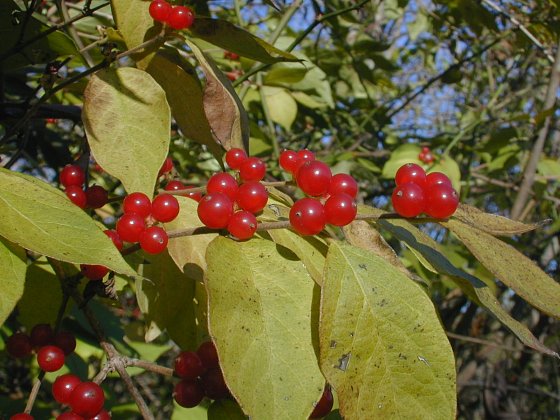
Finally, for those of you ambitious and unhindered by the cold, winter is the perfect time to tackle some invasive removal projects. Amur Honeysuckle, or Lonicera maackii, is one of the more stubborn invasives in the United States. Originally native to eastern Asia, this plant has spread itself all over the Midwest, Northeast, and Southeast. It is especially difficult to eradicate because of its hardiness. In the spring, this plant is one of the first shrubs to sprout forth new leaves and the last to lose them. It produces bright red berries in the late fall that can last into winter months. The plentiful berries attract birds which they then eat and disperse the seeds. While the idea of the berries feeding the birds does sound like a good thing, the undigested seeds from their droppings spread and grow rapidly.
Amur Honeysuckle are aggressive plants; the leafy branches grow quickly and block the sunlight from reaching other plants. Additionally, this plant competes with other plants for water and nutrients. By getting rid of this invasive, neighboring plants are better able to thrive. The combination of early leaves and birds’ appetite for the berries give Amur Honeysuckle a clear advantage. Other plants such as Autumn Olive or English Ivy also hold onto their leaves late into the year. Since these plants don’t drop their leaves early in the year, they definitely stand out in a forest, making winter a great time to remove them. Creating a team to help eradicate this invasive is not only a great way to care for creation but to also engage the community!
I’m all too familiar with the struggle of trying to figure out how to connect with creation in the winter months. The cold weather combined with short daylight hours can make finding the time and motivation to go outside difficult. But engaging with what God has created doesn’t have to stop in the winter. Finding new ways to appreciate what He has made can start anywhere. I encourage readers to find a new and maybe unconventional approach to creation care throughout the rest of this winter.