
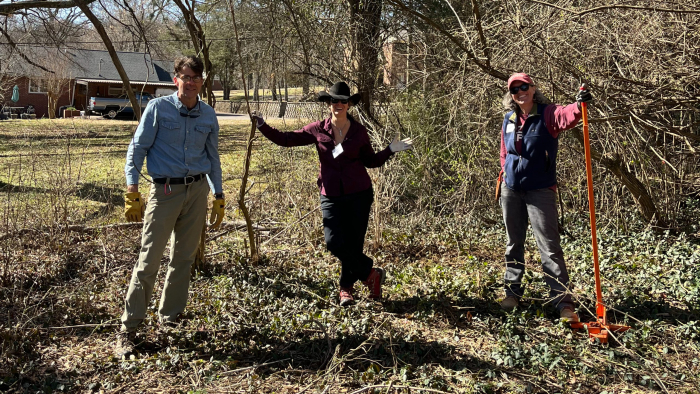
Cover image from the St. Bartholomew’s Weed Wrangle event, March 2025. Unless indicated otherwise, all photos in this blog belong to A Rocha USA.
by Noah Guthrie
Our Churches of Restoration program helps participating churches integrate care for God’s creation into their congregational lives. During our pilot year, we worked with over 20 churches from a diverse range of denominations, regions, and cultural backgrounds. Each church brings its own unique story and circumstances, and each pursues carefully chosen actions, large or small, to take a step forward to care for God’s creatures and landscapes.
This is the story of one participating congregation in Nashville, Tennessee, St. Bartholomew’s Episcopal Church. Many thanks to Gretchen Abernathy and Katherine Bomboy (supported by their teenage colleague Watson Danford) for all of their hard work in advocating for creation care at their parish, and to Katherine for sharing more about the ethos behind their work through an interview.
A tangle of trunks, bristling with striped brown columns of Bush Honeysuckle (Lonicera maackii), snaked down the shallow slope. To one side of us, a lawn opened out, and the stout chapel of St. Bartholomew’s Episcopal — a brick building vaguely reminiscent of an upended ark — rested on the grass. Some stray clouds drifted across the otherwise sunny sky, like doves brooding over the waters of creation.
It was March 1st, and at least twenty volunteers (more would arrive later on) had gathered for what was called a “Weed Wrangle.” These annual events are hosted by a volunteer environmental group of the same name, and they have occurred in over two dozen states, each with the goal of removing as many invasive plants as possible in one day.
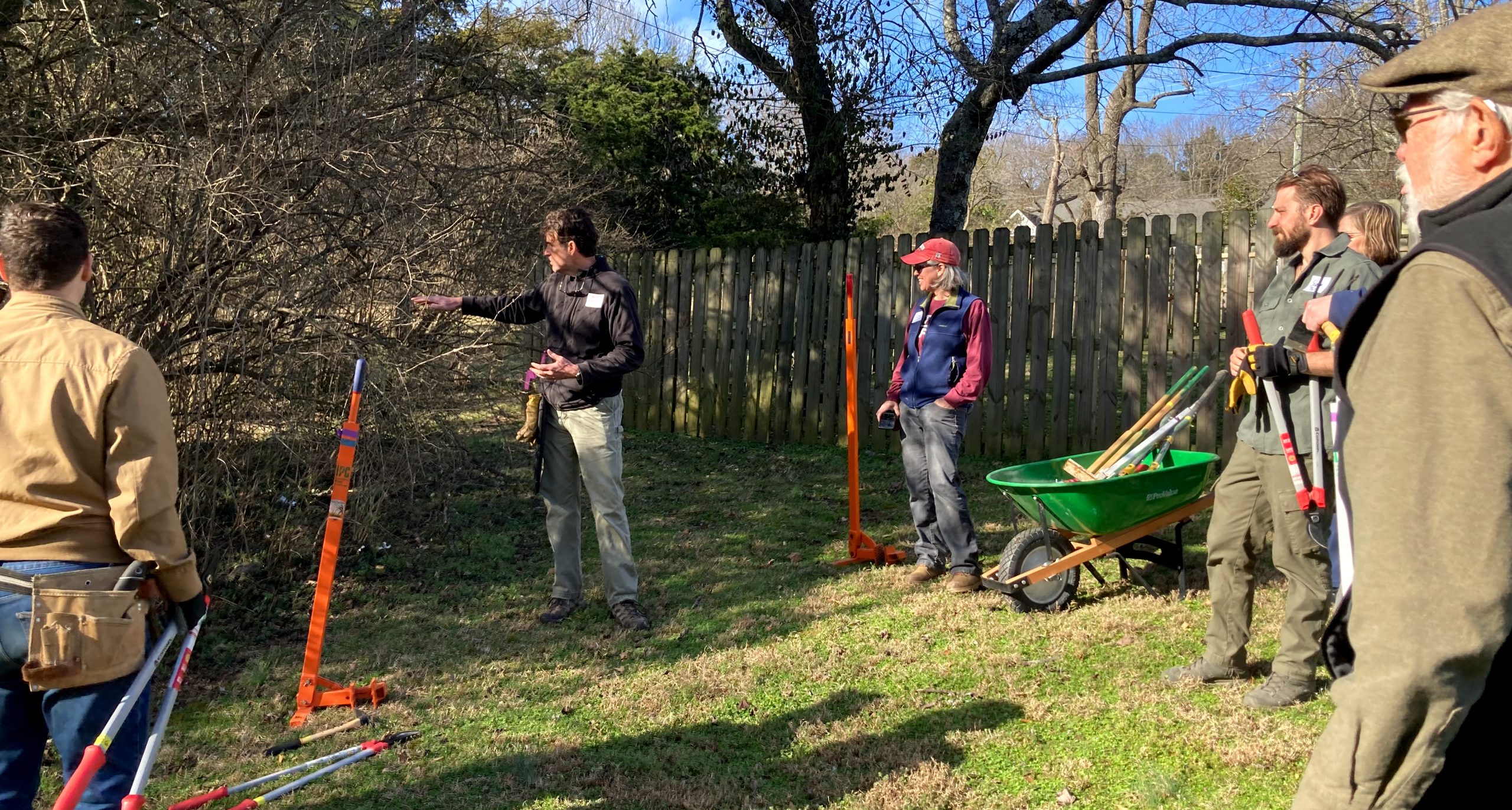
Invasive plant removal volunteers at St. Bartholomew’s Episcopal.
At the Weed Wrangle event at St. Bartholomew’s, which sits on twelve acres of land in south Nashville, the volunteers were a mix of St. B’s parishioners, neighbors, and others from the community. Representatives from Invasive Plant Control and the Garden Club of Nashville joined us, too, helping to introduce the event and to teach us how to use weed wrenches to uproot invasive trees.
This volunteering session was spearheaded by two members of St. Bartholomew’s, Gretchen Abernathy and Katherine Bomboy. Throughout my year of supporting Nashville’s 2024/25 Churches of Restoration Cohort, I was honored to work alongside these two thoughtful and passionate creation caretakers.
“The Weed Wrangle,” Katherine later told me, “was an opportunity for us to think more holistically about our campus… to really think about how invasives are impacting the space, and what we could do to be better stewards of it.”
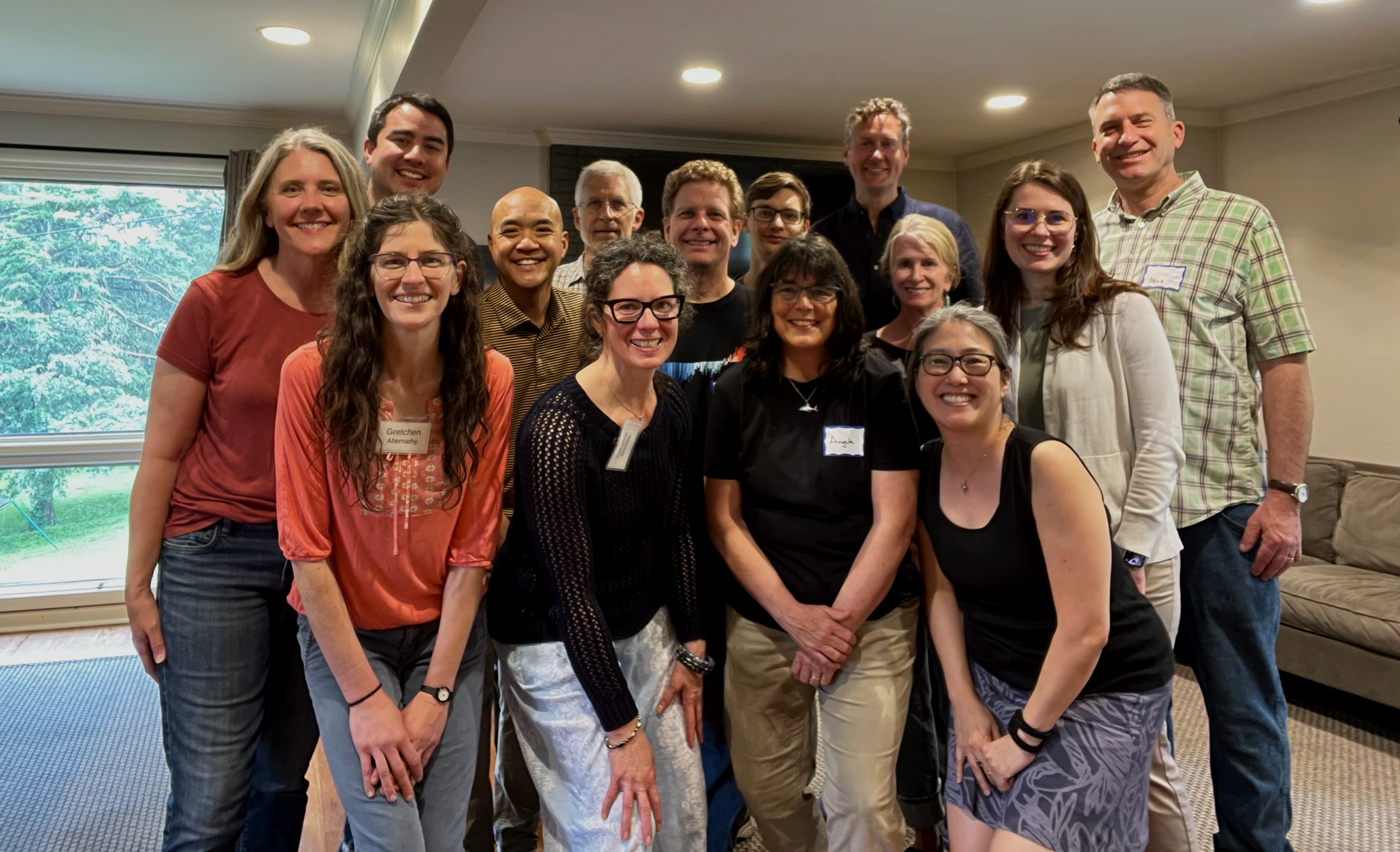
Gretchen and Katherine (L-R, front row, first two on left) with ARUSA board and staff members.
Sometimes, being a good steward of the land looks like planting — and St. B’s has done a lot of that already by tending to flowers, shrubs, and trees around their campus. (As part of their participation in the Churches of Restoration program, they are increasing the diversity of native flowering perennials and preparing to apply to the National Wildlife Federation to become a certified Sacred Grounds site.) At other times, being a good steward looks like uprooting — removing plants that obstruct the ecosystem’s flourishing.
Bush Honeysuckles are beautiful trees. Their airy, founting petals glow white and gold, stamens gleaming like flutes of marble, while their scent sweetens the breeze. Sadly, though, these plants spread aggressively in North America, rapidly conquering local ecosystems and harming their overall health and diversity.
So, out we marched into the St. B’s property, many of us wielding hacksaws, loppers, and weed wrenches. The wrenches gripped the bases of the honeysuckles, flexed like steel biceps, and dragged the roots free. Some volunteers chopped and uprooted while others carried the defeated trees to a brush pile.
Much as Samson may have heaped his thousand corpses of conquering Philistines (Judg. 15:14-16), so we heaped the bodies of conquering honeysuckles, now uprooted. By the end of the day, the brush pile had grown to about six feet tall, if not more, and stretched the length of three cars.
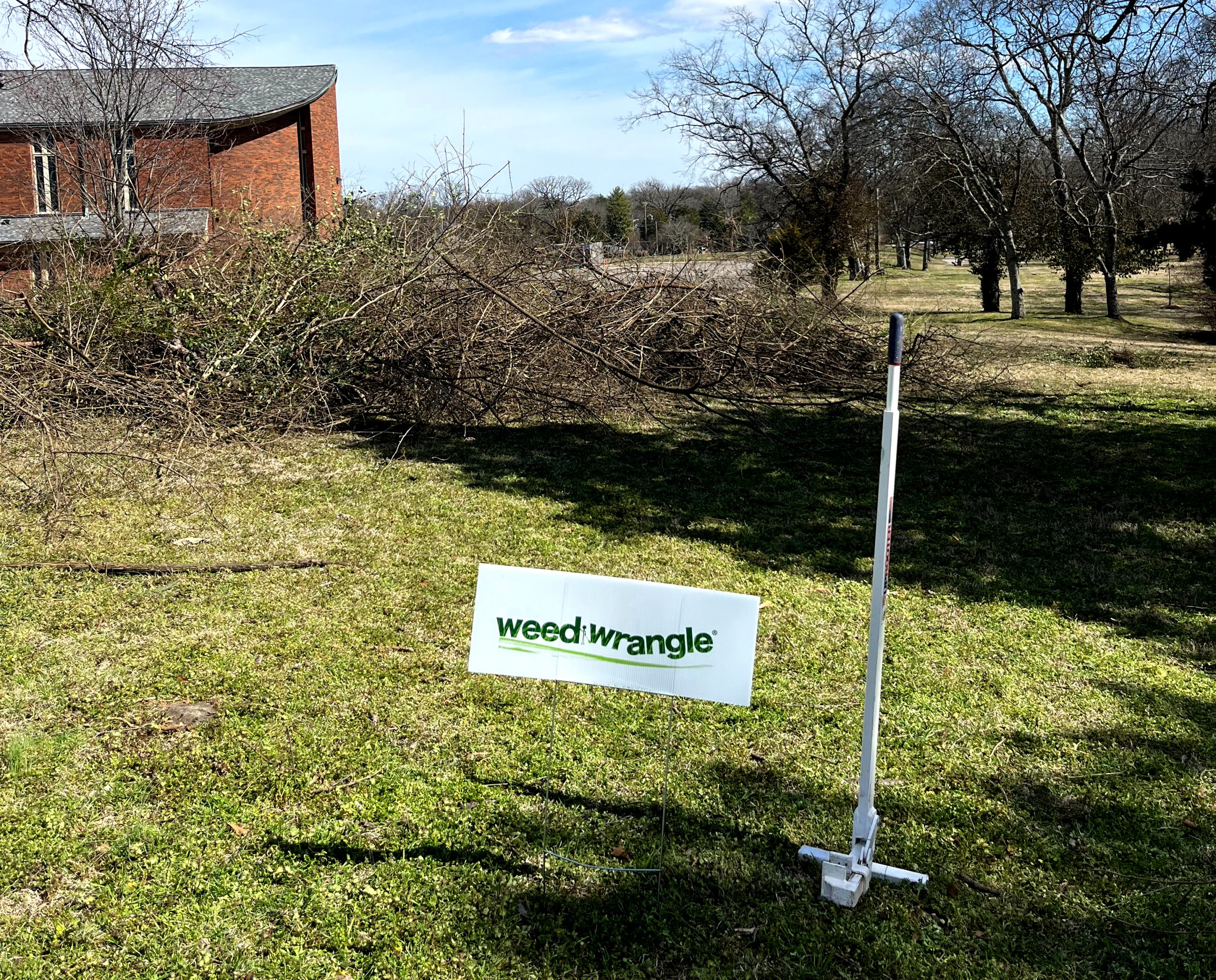
A weed wrench and the brush pile at St. Bartholomew’s Episcopal.
Katherine described these efforts as striving for a kind of “promised land,” an ideal reality where St. Bartholomew’s is reconciled with its surrounding ecosystem. “What does the creation care promised land look like?” she asked. “None of us really know.” When we’re striving for something we can barely imagine, it’s crucial that we let the Holy Spirit guide our actions — whether in building or destroying, in planting native coneflowers or removing invasive honeysuckles.
It’s interesting to note the Holy Ghost’s role in both creation and destruction. The same Spirit who “hovered over the waters” of the primordial cosmos (Gen. 1:2), preparing to give the “breath of life” to every living creature (Gen. 1:30), is the same Spirit who empowered Samson to kill a thousand Philistines with a donkey’s jawbone (Judg. 15:14-15).
Such examples should not, of course, lead us to conclude that God is temperamental, flip-flopping between life-giving benevolence and murderous rage. Rather, we find that in the context of human sin and error — it’s due to humans, after all, that these honeysuckles of Asian origin have taken over — destruction is sometimes a necessary step on the path to restoration.
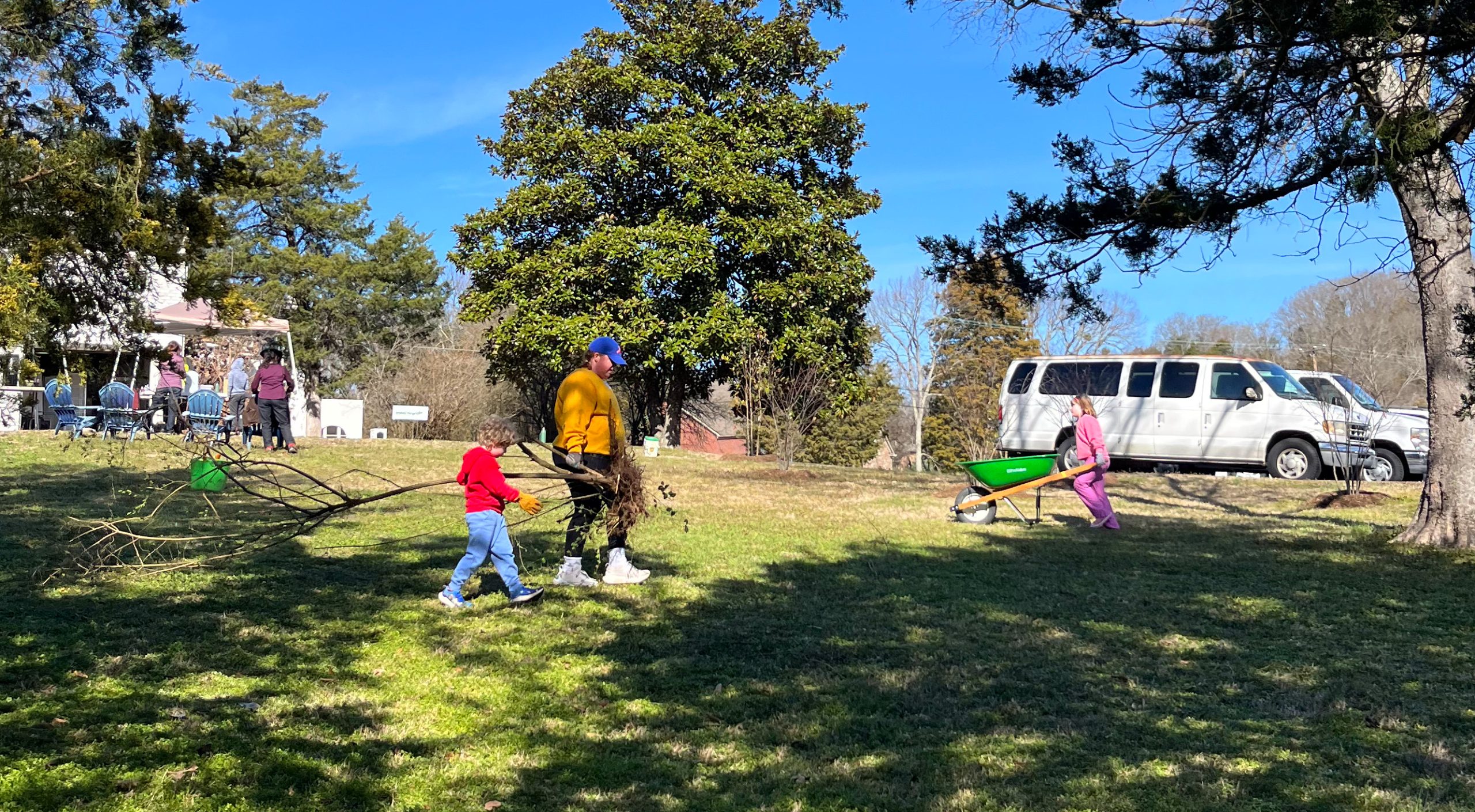
Volunteers clearing invasive honeysuckle from the St. Bartholomew’s property.
At the end of the Weed Wrangle event at St. Bartholomew’s, Katherine, Gretchen, and I walked across a freshly cleared stretch of land, a little over 3,500 square feet in all. The slanting sun tossed shadows from the brush pile, but poured warmth over the soil-and-grass terrain — a land waiting (with luck) to bloom into a diverse, resilient community of native plants.
This hoped-for future isn’t certain, and the path there is long. As Katherine pointed out, we “want to go to the promised land” of full reconciliation with creation, but just like the Israelites, it may take us forty years of wandering to get there.
At some point, most of those involved in creation care come to realize something: this work is an ongoing journey, demanding renewed effort and creativity as we keep seeking the collective flourishing of creation and humanity. This is why it’s so important to preserve God’s world as a community. It’s just too much for anyone to tackle alone.
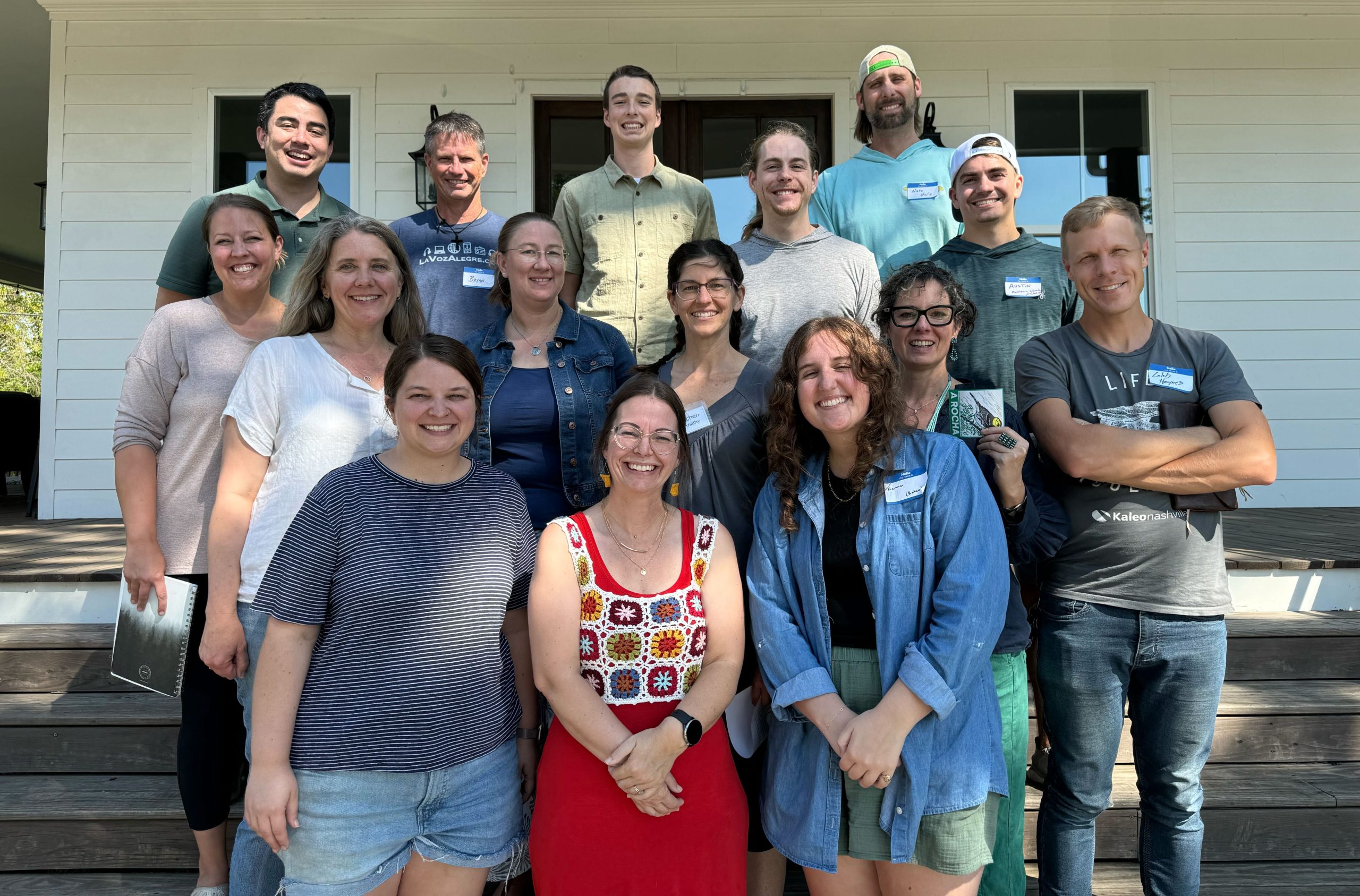
The 2024/25 Nashville Churches of Restoration Cohort.
Through our Churches of Restoration program, we invite congregations into a community of creation caretakers. St. Bartholomew’s was just one of the four Nashville churches in our program between summer 2024 and summer 2025. These faith leaders encouraged each other in waste reduction, pollinator gardening, and sustainable agriculture, among other projects. During the past year, the St. B’s team also joined other members of the Nashville Cohort at our Churches of Restoration webinars, as well as at an in-person tour of the unique, endangered ecosystem at the Couchville Cedar Glade of Middle Tennessee.
Before any of this happened, we talked with Katherine and Gretchen to workshop their “Spiritual Formation” and “Practical Action” creation care projects, though they did most of the hard work of brainstorming and planning themselves.
Their high-level, systems-oriented approach allowed them to sketch out numerous steps for living on and with their land with more care. In addition to invasive plant removal and native flower planting, they interviewed key staff members about how creation care is talked about and perceived in congregational life; audited their preschool for sustainable practices with the help of our intern, Mary; and started the process of preventing the Bush Honeysuckle from returning by preparing the cleared ground for beneficial native plants.
The latter action involved a solarization technique that the St. B’s team learned from one of the Churches of Restoration webinars. They enacted it in partnership with Plant for a Change, a local plant business that supports sustainable gardening for Tennessee’s wildlife.
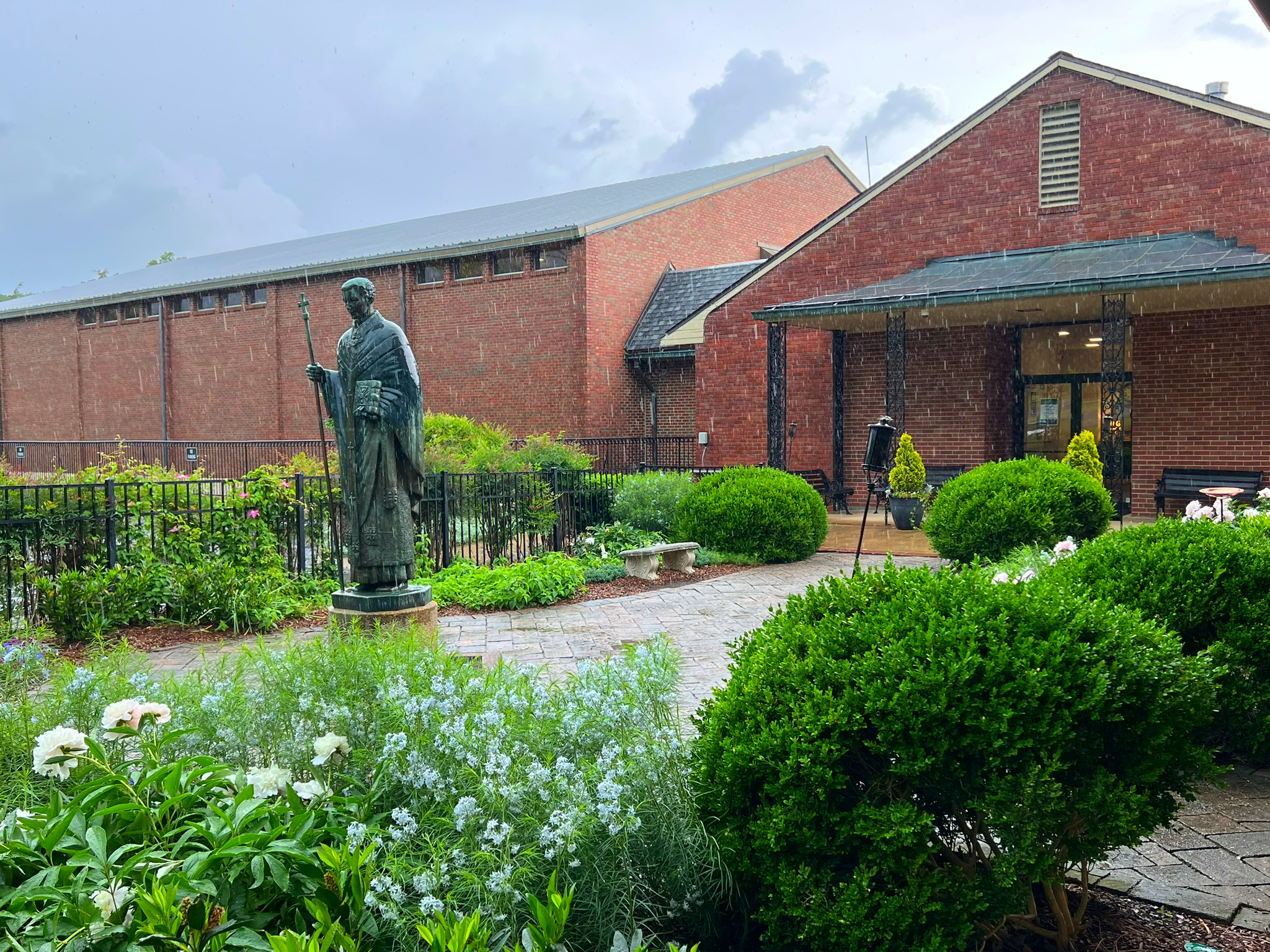
A garden at St. Bartholomew’s. By ARUSA Board Member Caroline Park.
We deeply admire the skill and zeal that the St. Bartholomew’s team has brought to this work. We are excited to see their parish continue to undergo the process of uncreation and recreation — a dying to the “old self” and a rebirth to the “new self.”
In terms of their congregational system, this process looks like dying to patterns of waste, human-centric living, and worship habits that reduce God’s greatness as the Creator, learning instead to love and act in alignment with all that pulses with the Spirit’s breath of life. In terms of the land their church buildings sit on, this process looks like taking twelve acres marred by the beautiful yet (in this context) destructive Bush Honeysuckle, then transforming it into an ecosystem where hosts of plants, insects, birds, and other species can thrive.

Noah Guthrie serves as our Nashville Conservation Coordinator, supporting our communications team and Churches of Restoration program from his home city. In his free time, he enjoys doing yoga, reading fantasy novels, and watching wholesome British TV with his family.
Since Noah’s role is largely sustained by individual donors, feel free to access his fundraising page at this link: https://arocha.us/donations/guthrie.
Add a Comment