
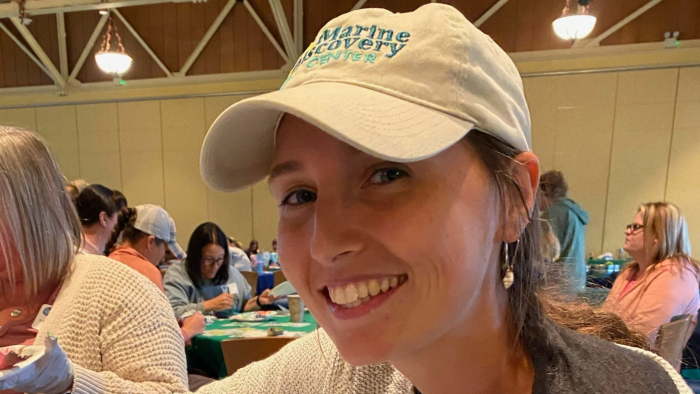
Cover image: Michaela Stenerson.
2022-23 Conservation Intern and 2023-24 Intern Lead Michaela Stenerson shares about her growing understanding of humanity’s place in the community of creation, and how she helps children to enter that same perspective. Blog post by Liuan Huska.
Help people, or work in nature? These two calls felt mutually exclusive to Michaela Stenerson, who grew up roaming her grandparents’ property in rural Ohio and feeling closest to God outdoors. At Taylor University, Michaela was able to join both passions through a sustainable development major, which included environmental science as well as public health. During her two years interning with A Rocha USA, one term clicked into place that further integrated her sense of calling and added a rich spiritual dimension to her work: the community of creation.
Everyday Practices That Foster Relationship
“Humans are one part of the community of creation,” Michaela explained. “When we care for the earth, we are not only doing it to help people, but taking care of it for its sake and God’s sake.” Though Michaela and her fellow interns came across these truths in some of their required reading, including Debra Rienstra’s Refugia Faith and Robin Wall Kimmerer’s Braiding Sweetgrass, the notion of being part of the community of creation really came home to Michaela through lived experiences during the internship.
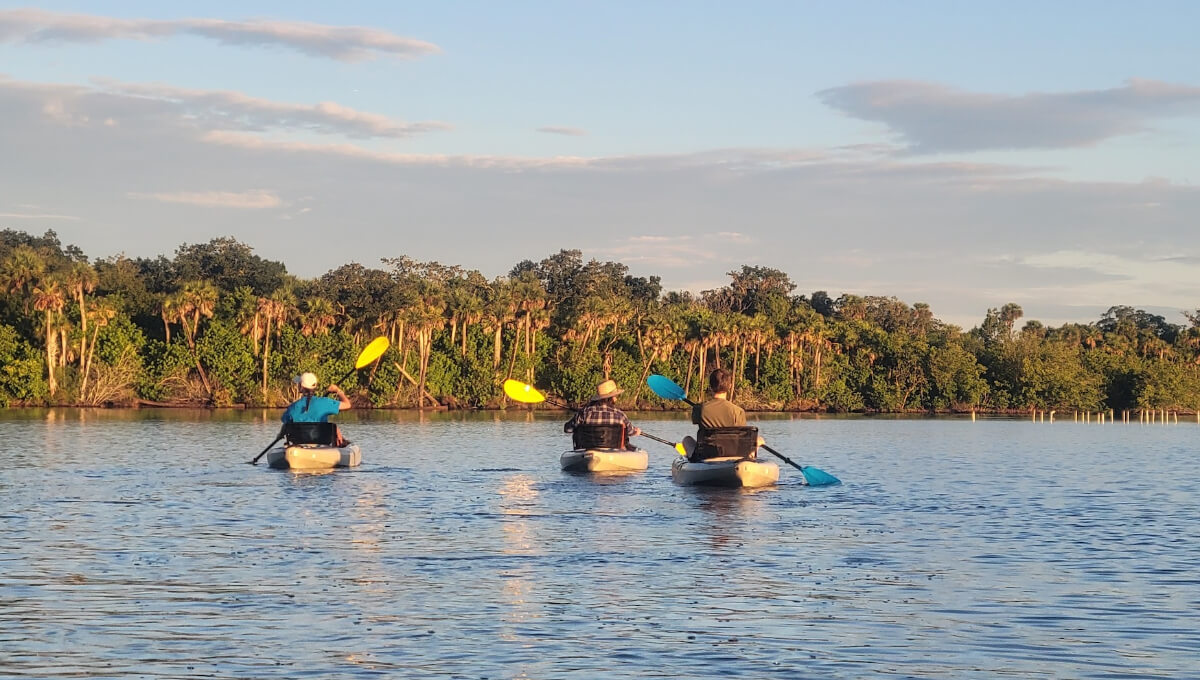
Michaela Stenerson (far left) kayaking in the Indian River Lagoon with the other 2023-24 interns.
The interns lived with the family of Dr. Bob Sluka, A Rocha’s Director of Marine Conservation, in Titusville, Florida. They formed a miniature community, where everyday practices like eating and composting were imbued with mindfulness of their relationship with the natural world. “We practiced being thankful for all of the parts that are involved in getting food to our plate — the rain, the soil, the microorganisms, and the animals that fertilize the soil,” Michaela said.
It was a big shift for her, as someone who had grown up eating mac and cheese out of boxes, to even harvest some of her food from pots growing right outside the kitchen window. “Rather than this kind of black-and-white, ‘there’s people, then there’s nature’ perspective,” Michaela observed, “it became integrated.”
When Michaela and her fellow interns traveled to partner organizations around the Indian River Lagoon to participate in monitoring and restoration projects, like building oyster reefs and counting horseshoe crabs during mating season, they discussed on the way home why these small acts of service on behalf of creation mattered. “We weren’t just helping out these research groups for science’s sake,” Michaela explained, “but learning to live together with the rest of God’s creatures and be intentionally aware of our human impacts on the community of creation.”
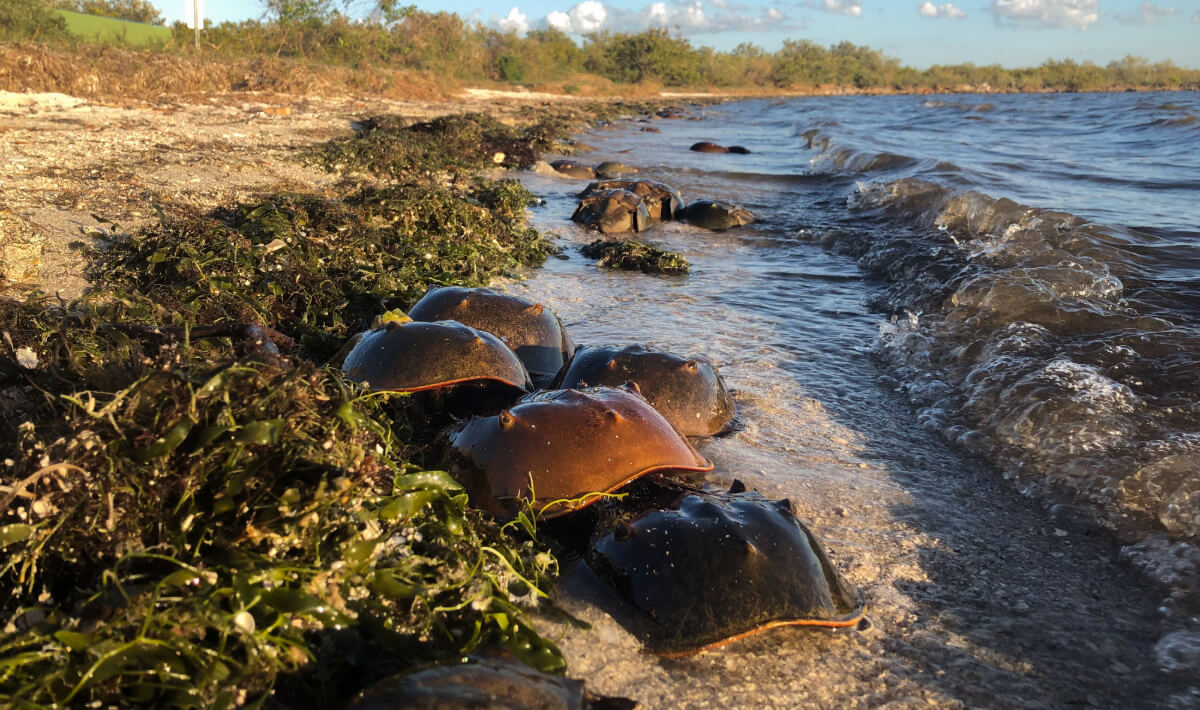
Atlantic Horseshoe Crabs (Limulus polyphemus). By Michaela Stenerson.
Another practice from the A Rocha internship that embodied a shift in mindset for Michaela was worshipping with the ocean, an activity which Bob has led with many interns and groups. During the activity, Bob invites people to engage with the ocean not just as a backdrop to communing with God, but as part of the community that worships God together.
The participants pay attention to the ocean and hear what it might be communicating, as part of a wondrous creation whose members “pour forth speech; night after night they reveal knowledge” (Psalm 19:2). Michaela reflected, “Instead of thinking of nature and humans as separate, and just wanting to have as little impact as possible on nature, there’s this mindset shift toward a relationship with these ecosystems that we live in and that we’re a part of.”
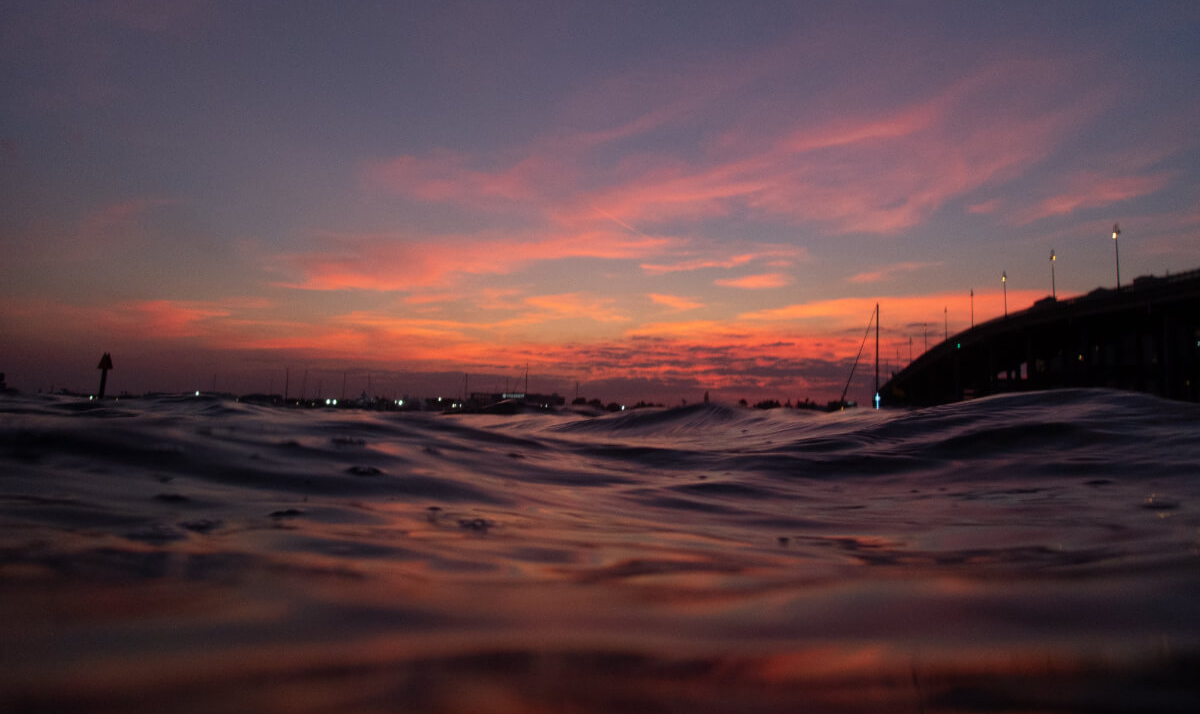
Photo by Michaela Stenerson.
Bridging People and Environment
During her second year, when she served as the Intern Lead, Michaela and her fellow interns joined Texas Project Director Veronica Godoy in doing habitat restoration and environmental education around the Austin area. Helping local Spanish-speaking families get to know their ecosystems confirmed for Michaela her interest in environmental education.
At one Picnics en el Arroyo event, Michaela remembers the group stumbling upon a large stick bug (Order Phasmatodea). All of the children screamed and backed away. But then, the naturalist guiding them picked the stick bug up and showed the kids more closely. She told them fun facts about it and how it fits in the web of life that inhabits that particular forest. Michaela could see the students becoming more comfortable.
“Not only did they get to know it, but they were learning to appreciate it and not fear it,” Michaela said. “Now if they stumble upon another in their free time, they may feel as though they are seeing an old friend rather than an intimidating stranger. I love being able to facilitate this deeper connection to place and help people feel more at home in the ecosystems that surround them.”
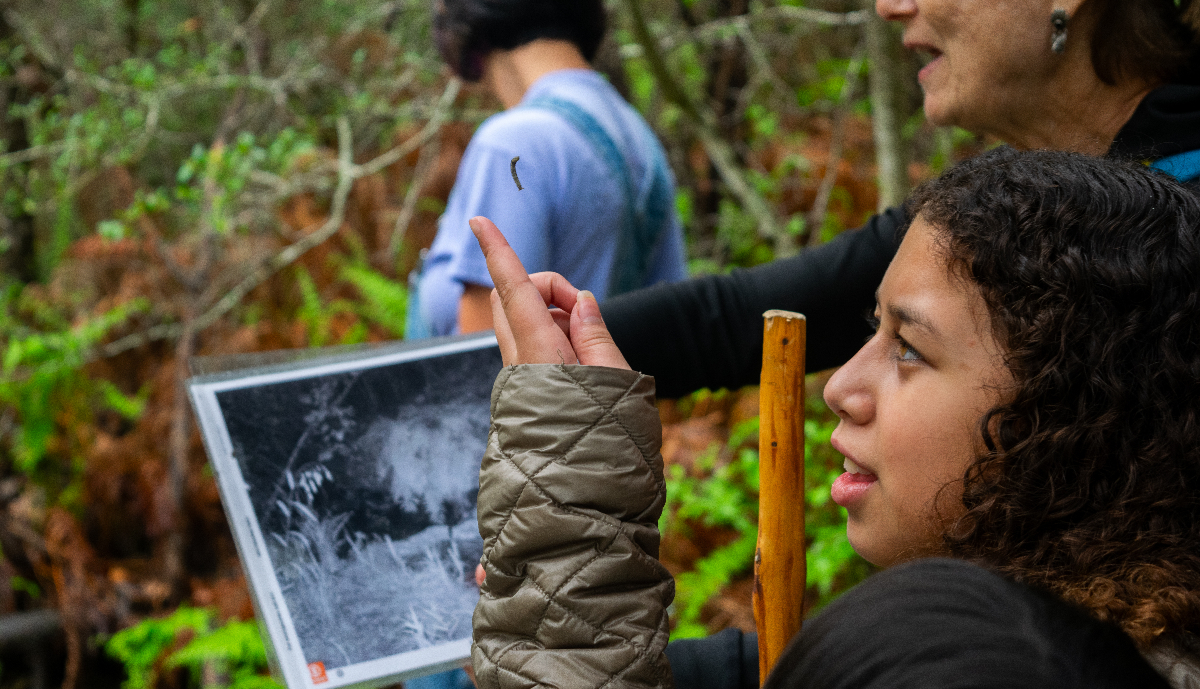
Picnics attendant marveling at a silkworm. By Michaela Stenerson.
Today, Michaela works as an Education Specialist at the Marine Discovery Center in New Smyrna Beach, Florida, just a short drive from the Indian River Lagoon. The Center focuses on education, exploration, and conservation, including a project to support oyster populations on the shoreline. Recently, she emceed the Marine Discovery Center’s ShORE Symposium, an annual sharing of research, education, and conservation efforts around the Indian River Lagoon. Several rounds of A Rocha USA interns have had the opportunity to present at this conference.
Michaela’s day-to-day work involves taking groups out on pontoon boats to introduce them to the myriad forms of shore life and facilitating a sense of wonder. “Look how cool this is. You and I are connected to it. We have to take care of it.” These are some of the messages she aims to convey. “I’m passionate about the relationship between people and the environment,” she affirmed, “and helping people build that connection.”
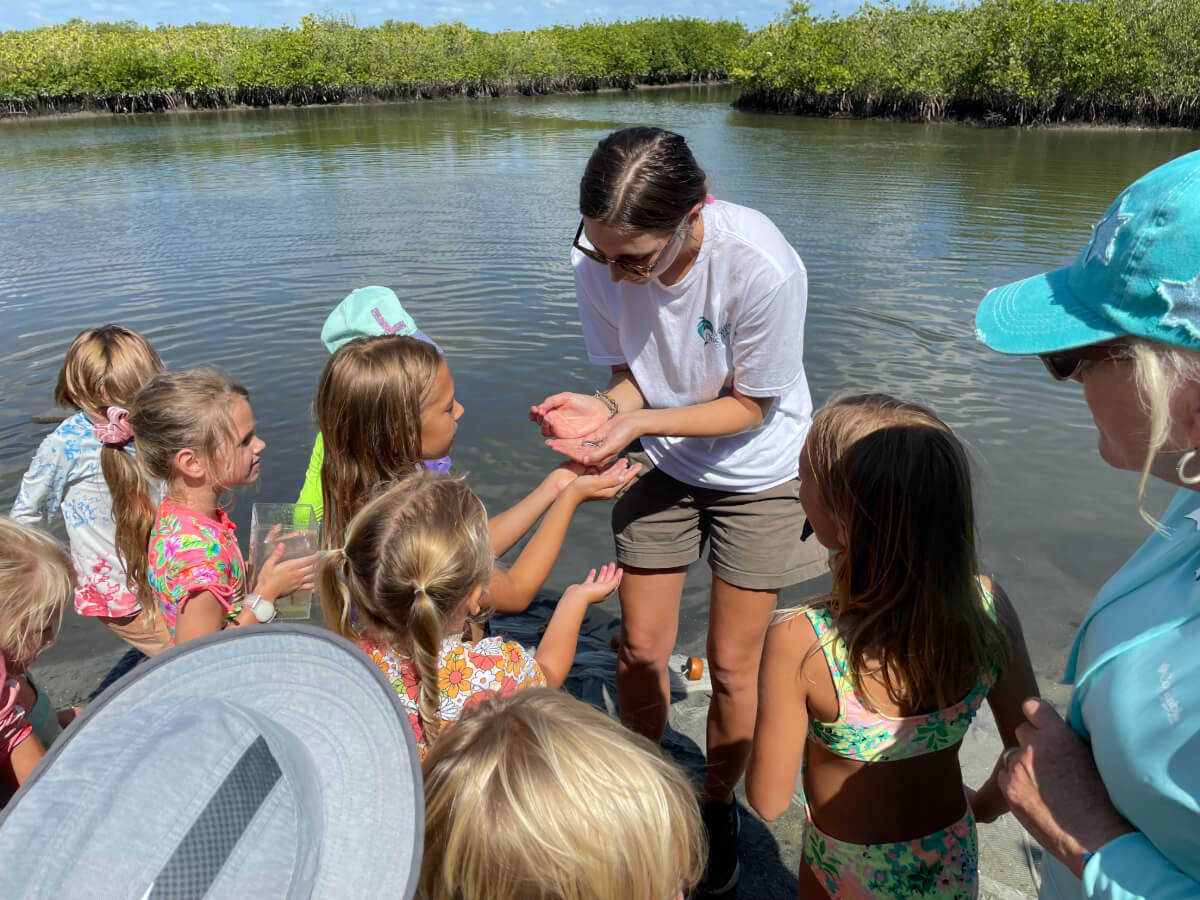
Michaela teaching for a Marine Discovery Center program.
Donate to support our Conservation Internship Program.
To read Michaela’s reflections on Horseshoe Crabs, check out her article in God and Nature!
You can also watch her beautiful video on this species, “Wind Watchers,” which she developed together with interns Alli Cutting and Nick Davis, and with Dr. Bob Sluka.
Add a Comment