
How forgetting to buy a lawnmower opened a world of life in Mark Gaspar’s yard.
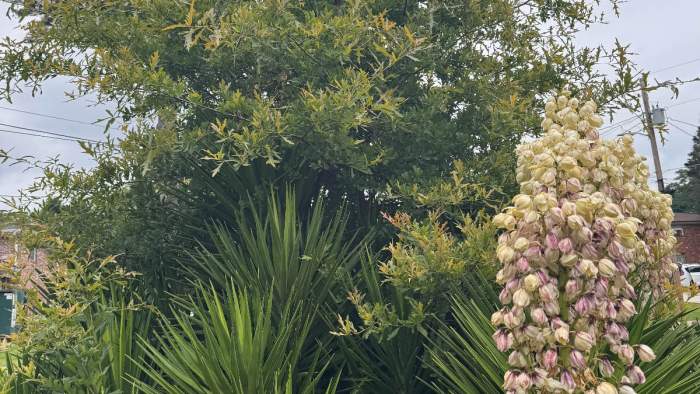
Cover image portrays an oak emerging from a yucca grove in Mark’s yard. All photos in this blog are by Mark Gaspar.
by Mark Gaspar
Mark Gaspar is an advertising writer who, as a transplant from the north, was rooted in the clay of Decatur, GA. He has grown to love the wild things found in the most normal of places: a single-family rental he shares with his wife and two dogs. He found A Rocha through the “Re-Enchanting” podcast series and shares in the belief and mission that, as image-bearers of our Creator, we are called to steward and encourage his good earth. You can find more of his writing at his Substack, This Inhabitation.
It is lunchtime, on a weekday, and I have my face against a pine tree. This is not a metaphor; this is intimacy.
The bark is still warm from its morning sun bath. I press my nose into the fissures where the bark peels back and wait for the terpenes to do their work on my senses. Butterscotch and vanilla; the sap still stupid with spring trickles its aroma out and into my nostrils. Above me, a White-breasted Nuthatch does what nuthatches do: creep facedown the tree’s trunk towards the peanut butter bricks I’ve set out, chirping and twirping all the way down.
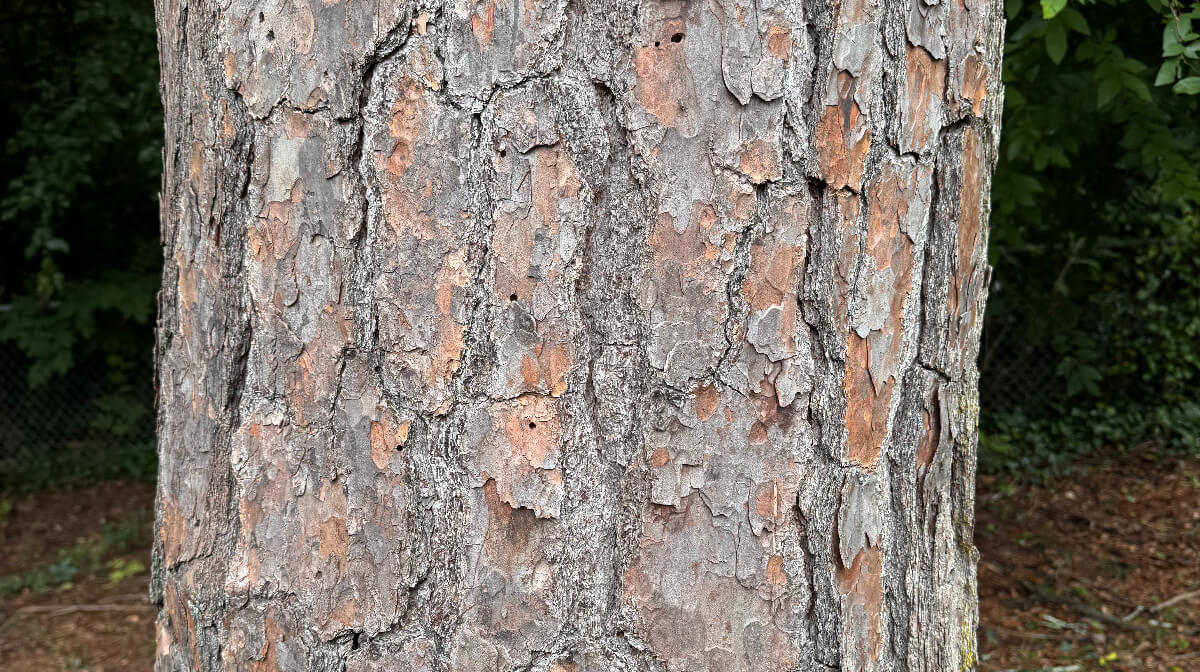
Bark of an elderly Slash Pine.
“That thing ever gonna kiss you back?”
My neighbor has caught me. Ms. West is in her early 80s. Since her husband of 60 years died last year, we’ve found ourselves conversing in the backyard more often. Now she is outside with her daughter making their first vegetable garden in the space his death has left between them. She has promised us tomatoes, cucumbers, and maybe even a watermelon if they come in. She has acknowledged she might be a bit ambitious for a first-timer.
Back to the tree; I am embarrassed at being discovered, and the dogs outside with me lose their mind at being surprised. She says “shhhhh,” and they believe her. I find animals recognize who can back up their words. Apparently, I’m not one of them.
The Grace of “Yes And”
We’ve lived in this rental house in south Decatur, just east of the border of Atlanta, GA, for the last four years. It’s the longest either of us has lived anywhere outside of our childhood homes. Nothing here is ours.
The house lives in a mature subdivision built during the 1950s, with 52 homes along three interconnecting streets. Its backside is flanked by Shoal Creek, a trickle of water that runs through a dense, untended forest; it ferries foxes, coyotes, and sometimes lost dogs gone wild. Hawks and vultures ride thermal winds above us. It’s all a bit overgrown and wild; a reminder that creation can get along just fine without us.
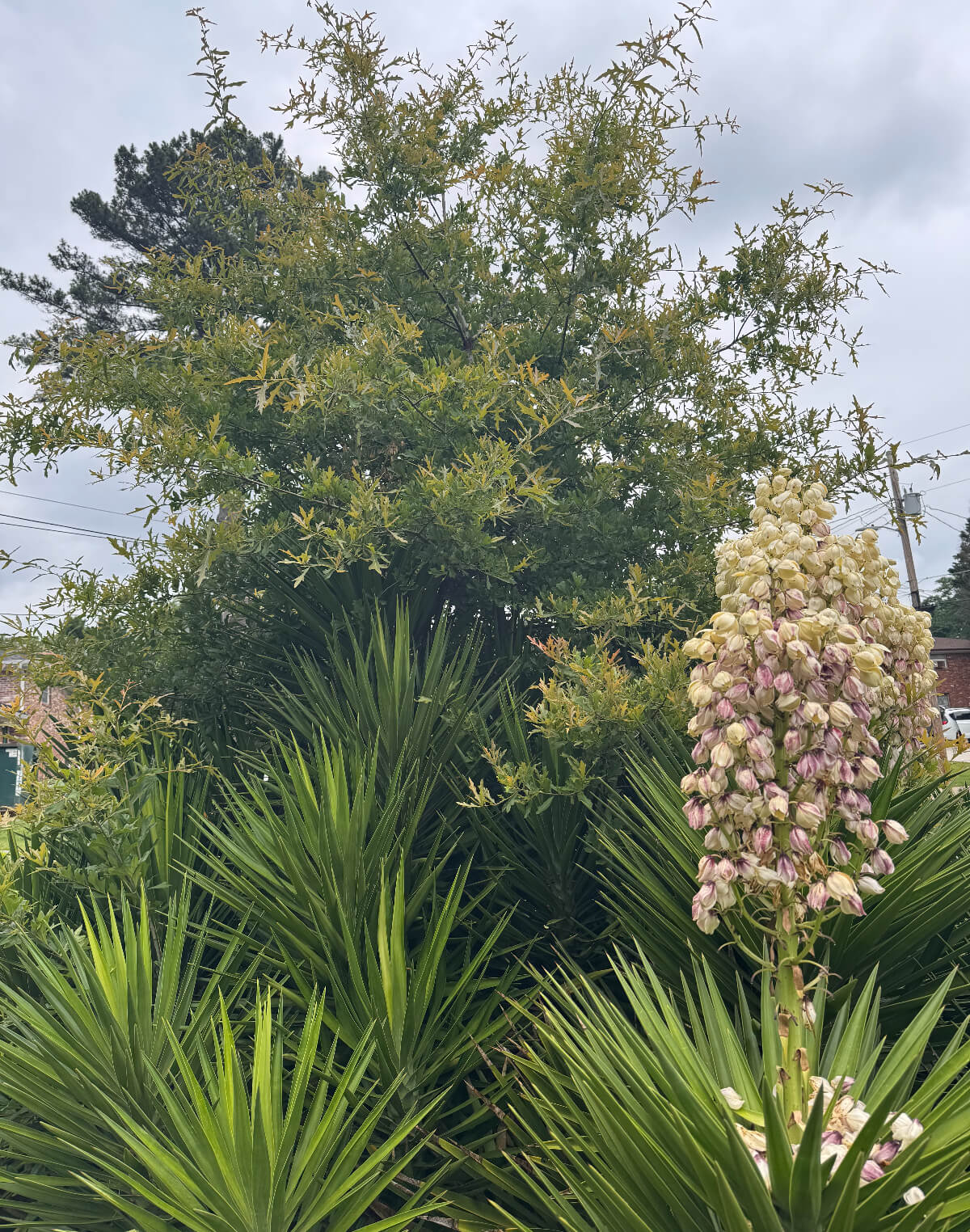
Oak bursting from the center of a yucca plant.
The first spring in the neighborhood, we didn’t have a lawnmower. This was less an ethical choice and more one of logistics, but the grass didn’t know that. Springtime in Georgia disabuses you of the notion that creation waits for an invitation. Within weeks, geckos appeared in the tall grasses, and Milk Snakes began threading themselves through the blades in pursuit. Chipmunks, squirrels, and rats followed; a possum now taunts and tortures the dogs from the front yard after the sun goes down.
Our first May in the house, I bought one birdfeeder. Now there are six, plus two for hummingbirds. This spring, we added a “nuts bar” on the turf for the rodents and any nighttime creatures who amble by. In four years, the front yard has become pockmarked and useless for human purposes, which is to say it’s positively drunk with life.
This is the first year with rats, and I watch them scurry and tramp about in skittish bursts, belly-crawling to the seeds spilled on the grass and jumping along the garden hose. Normally I’d be embarrassed at my giggling and watering eyes, but I’ve decided I’m now too old to deny myself this little joy.
The birds are new, too. They arrive with new additions each year. Cardinals the first year. Then titmice, nuthatches, and the Downy Woodpecker with his red pompadour and single-minded focus. The last two springs, we have had a marauding flock of Red-winged Blackbirds take up residency for a week and throw everything into disarray. For the first time this year, Rose-breasted and Blue Grosbeaks glide in; here for a few days and then gone north or south; wherever something surprising and beautiful goes when you let it leave you.
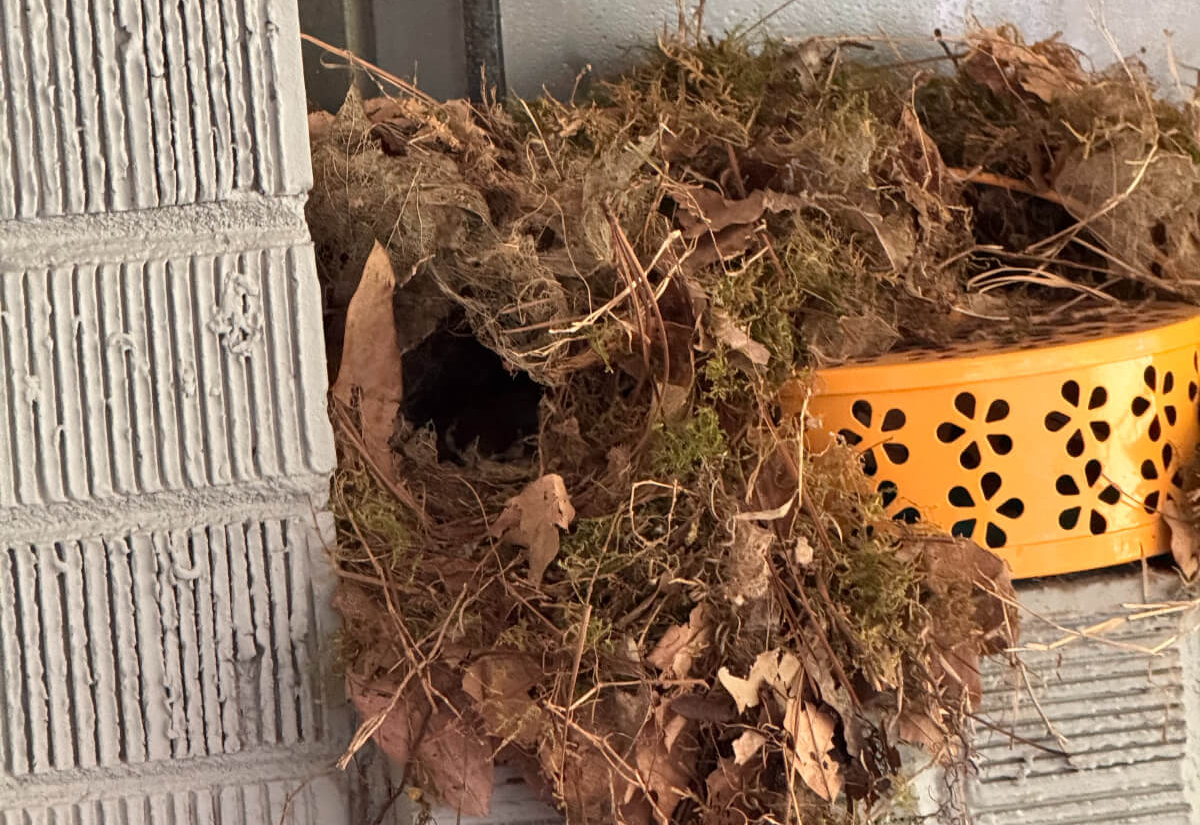
Carolina Wren nest built in the backyard patio.
One feeder became six. The birds’ spillage fed the rodents, which brought the owls and hawks and foxes and one time a coyote sunning itself in the backyard. I didn’t plan all of this. I just forgot to buy a lawnmower. Somehow an oak tree began growing right out of the center of an impenetrable yucca plant in the center of the front yard. It didn’t ask for permission, but the yucca accepted it nonetheless.
Creatures sought and found food and shelter in the wild millet. A solitary sunflower appeared over the course of a week, and now tilts its overgrown head toward whatever draws its attention. The whole yard, given space, keeps saying “yes and, yes and, yes and…” The grammar of improv appears to be the grammar of creation – of grace.
Room to Enter, Room to Leave
A hawk took one of the rats. I had been watching them scurry and run all week, learning their movements. Then, as I was reading on the sofa, a flash of wing crashed across my vision. Standing over the coffee table, dumbfounded, I looked down, and the hawk turned its eyes on me with a look that seemed to imply I was the rude one. It turned and flew off, its talons full. That was the end of the rat and the beginning of some things I needed to think about.
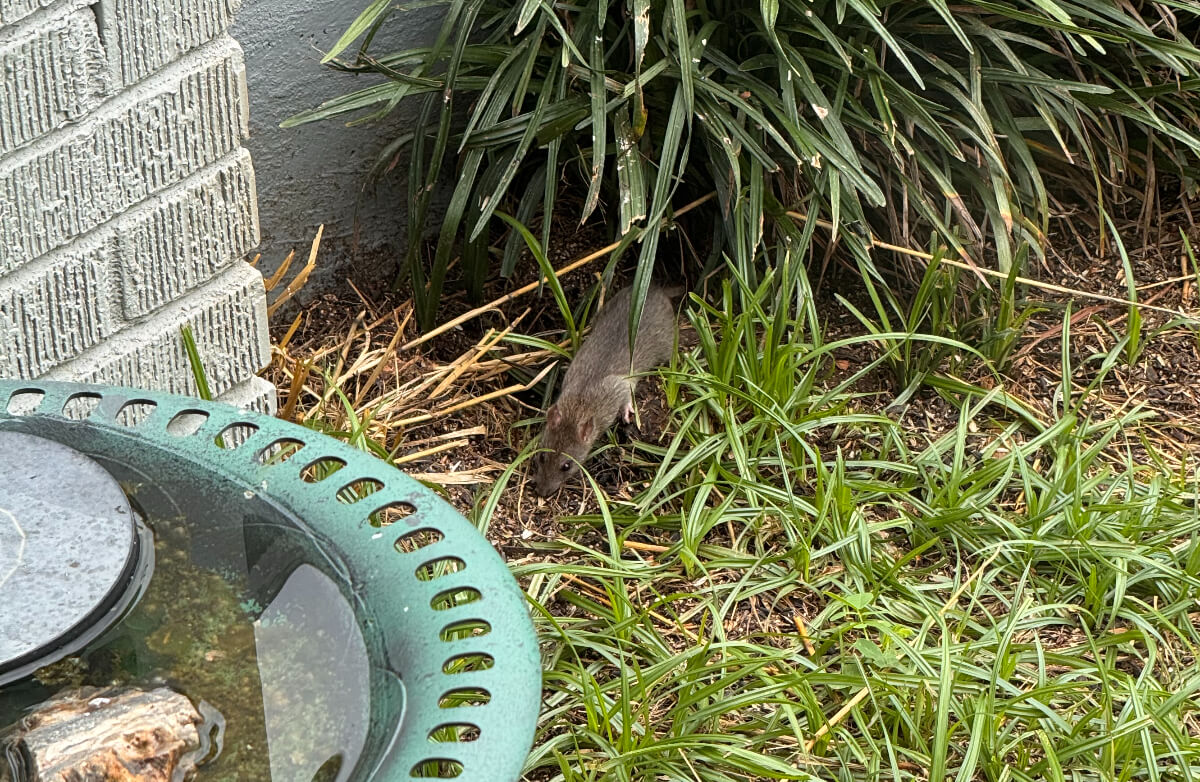
Young rat exiting the rodent highway in Mark’s yard.
To love something is to lose a little of it every day. This is the uneasy calculus of how we live and must learn to love; the rat is carried away, the hearse comes for your neighbor; the lease ends, and you pray those who take your place will love this land as much as you, even if it won’t be in the same way. You trust the yard doesn’t need your inaction to survive.
To love something is to make room for it to enter, and also room to leave.
We are taught to live otherwise. We must optimize, improve, and fill any gaps between what exists and what we need it to be. However, what the yard teaches, and has taken me nearly four years to learn, is to do less and watch more. To let the lesser leave its trace.
Let There Be
Jewish mystics have a term, “Tzimtzum.” It refers to how God limits himself in an act of divine generosity that makes room for us, and for the birds, rats, hawks, dogs, and other neighbors. This yard has been teaching me generosity. The more I come to love it, the more I’m drawn back over and over to Genesis 1. My most recent reading of the well-told story left me circling around a single word. God doesn’t state, “I will make light.” He says, “Let there be.” “Let” – less a command and more an allowance. God gives space for creation to come through, almost as if he turned to the heavenly hosts with a wink and said, “Let’s see what happens now.”
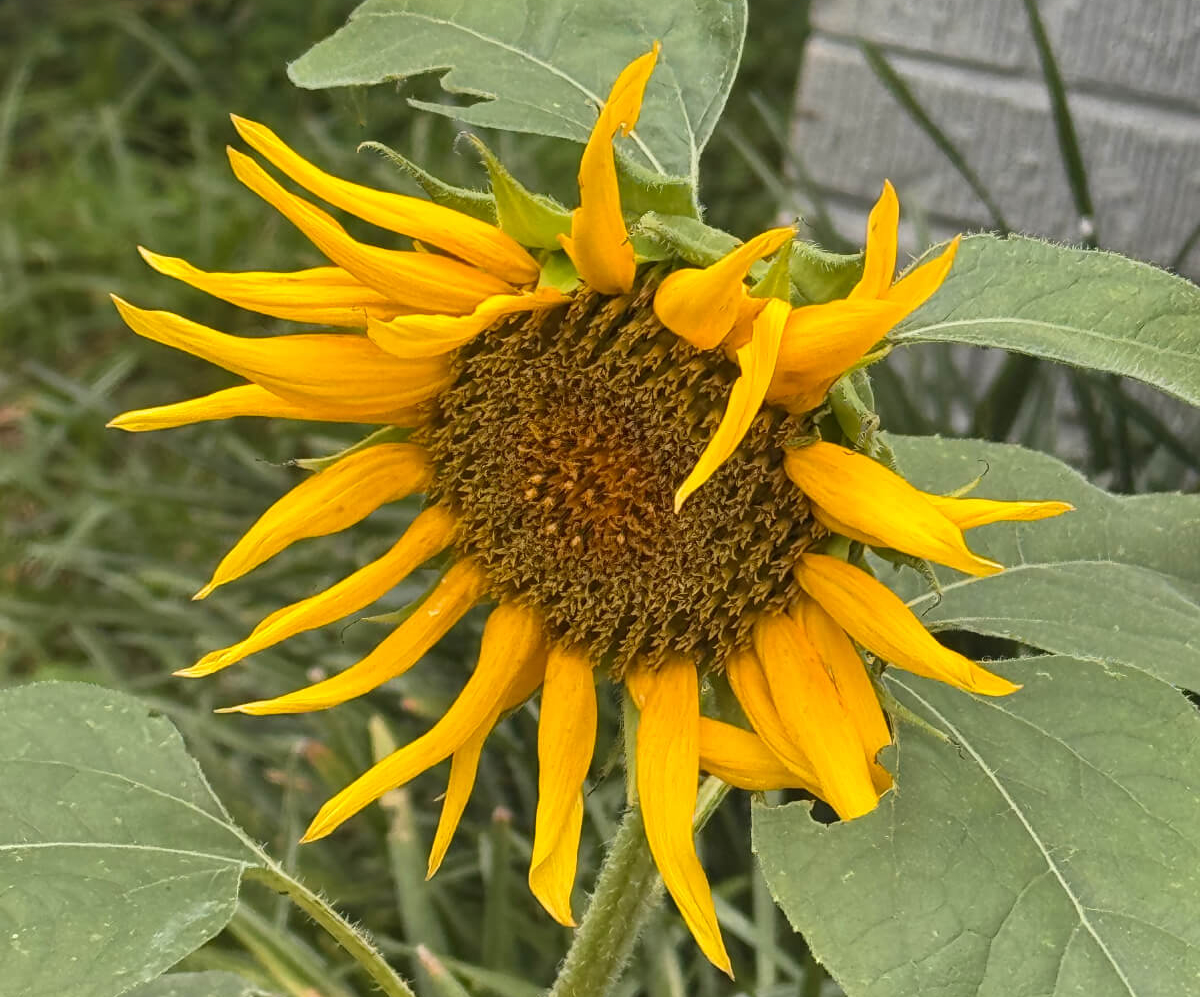
“Let there by light.” (Wild sunflower.)
This third of an acre in south Decatur teaches that absence and creation go hand-in-hand. Absence, or stepping back; loosening the hands to hold something lightly is its own invitation for presence to be released; an imitation of what has followed God’s creative work throughout all the cosmos.
Ms. West is still in her yard, filling her day in ways that would have been unimaginable the year before – before her loved one’s absence. Now, she is laughing at me; the dogs, chastened, have gone back to the concentrated purposelessness that only dogs have mastered. The nuthatch has bounced back to the lower branches.
I hope the two pines outlive me, though mostly I hope I won’t outgrow them. I am trying to make space. I fail most days. But the grosbeaks came, and then they left; the rats came, and though one was carried away, the rest remain. The yard continues to hold both. Let’s see what happens now.
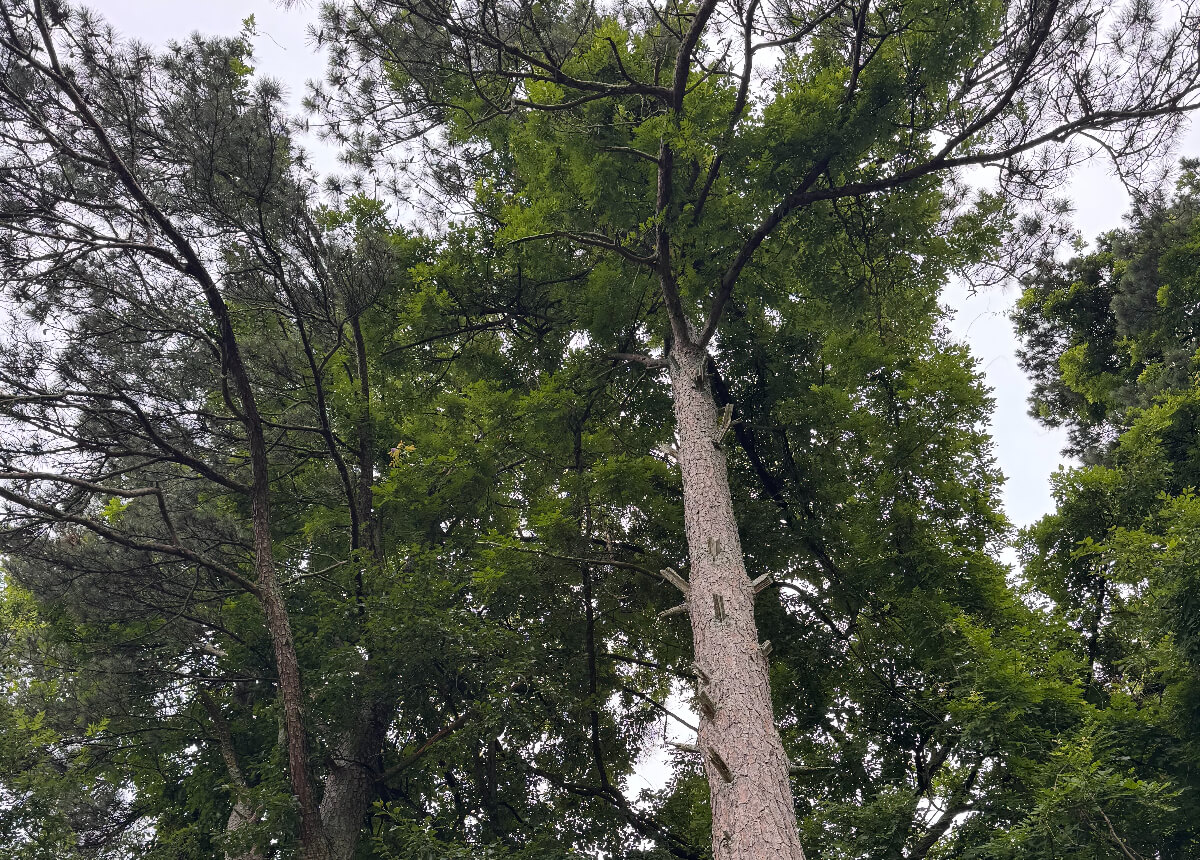
Canopy of the Slash Pines.
Learn more about sustainable gardening and landscaping practices using A Rocha USA’s “4 Tips for Creature-Friendly Yards and Gardens” resource!
Add a Comment