Welcome back to our blog series of Q&As with our staff. As our team has grown in recent years, this is a chance to get to know some of our stories and quirks. Caring for creation and equipping others to do likewise is so much more meaningful — and fun — when done as a team!
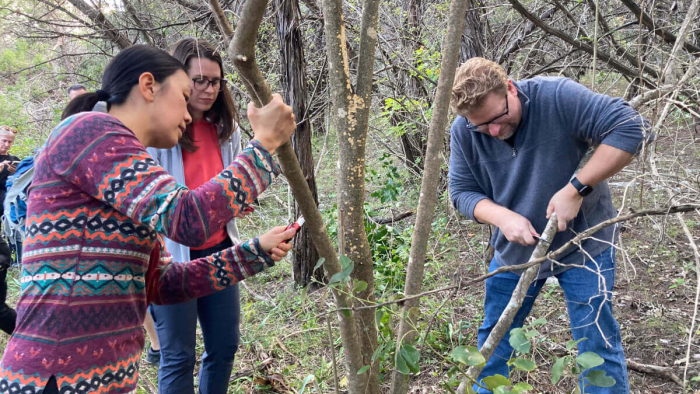
Photo caption: A Rocha USA Director of Communications Liuan Huska (in purple on the left) girdling an invasive Glossy Privet.
What drew you to A Rocha?
People who find a deep connection with God in the natural world and want to learn all the nerdy facts about various species and ecosystems are my kind of people.
When did the connection between faith and environmental work first “click” for you?
I don’t know if there was a specific moment, but over the past decade I’ve had the growing understanding that my deep care for the earth is not something separate from my spirituality, but that it is precisely because I have internalized the gospel story of Christ’s incarnation, crucifixion, and bodily resurrection that I place so much value in this earthly world that God through Christ has made and redeemed.
What’s your favorite species and why?
I have a dearly beloved maple tree (family Aceracaea) that sits in our front yard. She shades my upstairs bedroom windows, and I can look out from them in all seasons and see her new green leaves unfurling, dark summer green, autumnal gold, or bare winter branches. We also tap her for sap some years in maple sugaring season!
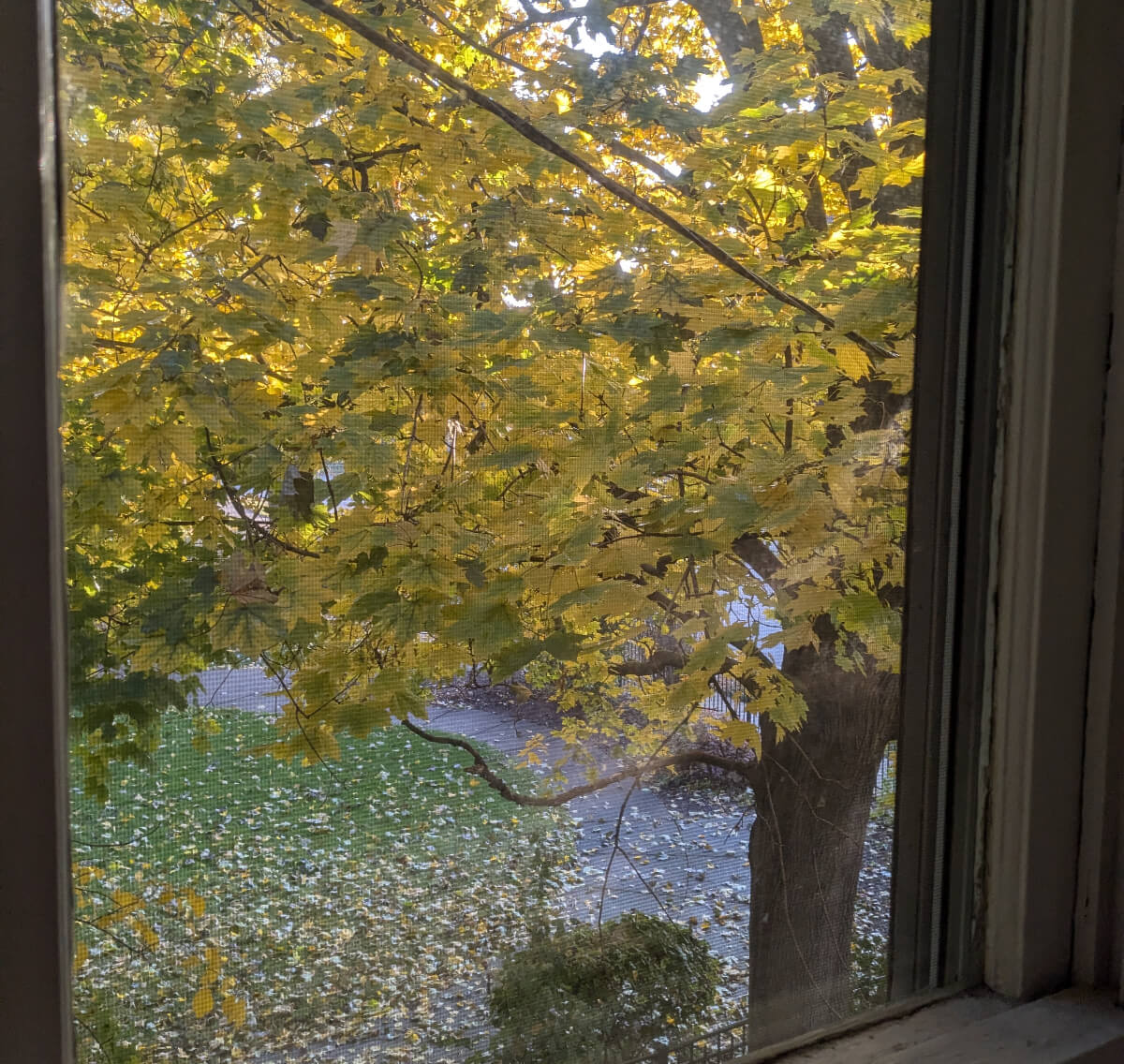
The beloved maple (family Aceracaea), viewed from Liuan’s window.
What places are near and dear to your heart?
I do love the area where we live, northern Illinois. It’s the place where I’ve spent the most years of my life and had the most time to learn the stories and names of the creatures who call it home. In the past few years we’ve really enjoyed the local forest preserves and doing some urban foraging for things like lamb’s quarters, purslane, Garlic Mustard (invasive), black raspberries, serviceberries, and lots more.
What training/background do you bring to this work?
I’ve been a writer and journalist at the intersection of environment and faith. I studied anthropology in college and social sciences for my master’s degree, and can’t help going on research rabbit trails in whatever kind of work I do.
What are the most challenging aspects of your work?
Run-on sentences! No, in all seriousness, being a remote team spread across the country, we spend a fair amount of time on the computer and doing Zoom meetings, which can be tiring. This also makes it extra special for our team to be in person.
In my role as Director of Communications I also find it challenging to keep up with the latest trends in digital communications and optimizing our content for artificial intelligence and algorithms to make sure people see them. I’m always working to find a balance between the grounded human and nature-based core of our work and the digital, less meaningful, but necessary elements.
What are the most rewarding aspects of your work?
I love being part of a team of people who are working for a common good of restoring human-nature relationships for the flourishing of all creation. When I hear all the bad environmental news, it’s so helpful to be able to do something about it all through my work.
What are some ways you see A Rocha’s work bringing life to your local ecosystems?
In the Chicagoland area, I’ve had the privilege of coordinating a cohort of churches in our Churches of Restoration program. I’ve really enjoyed seeing these church leaders form connections with each other, meet other environmental groups doing good work, and start to bring their personal love for creation into their worshipping communities.
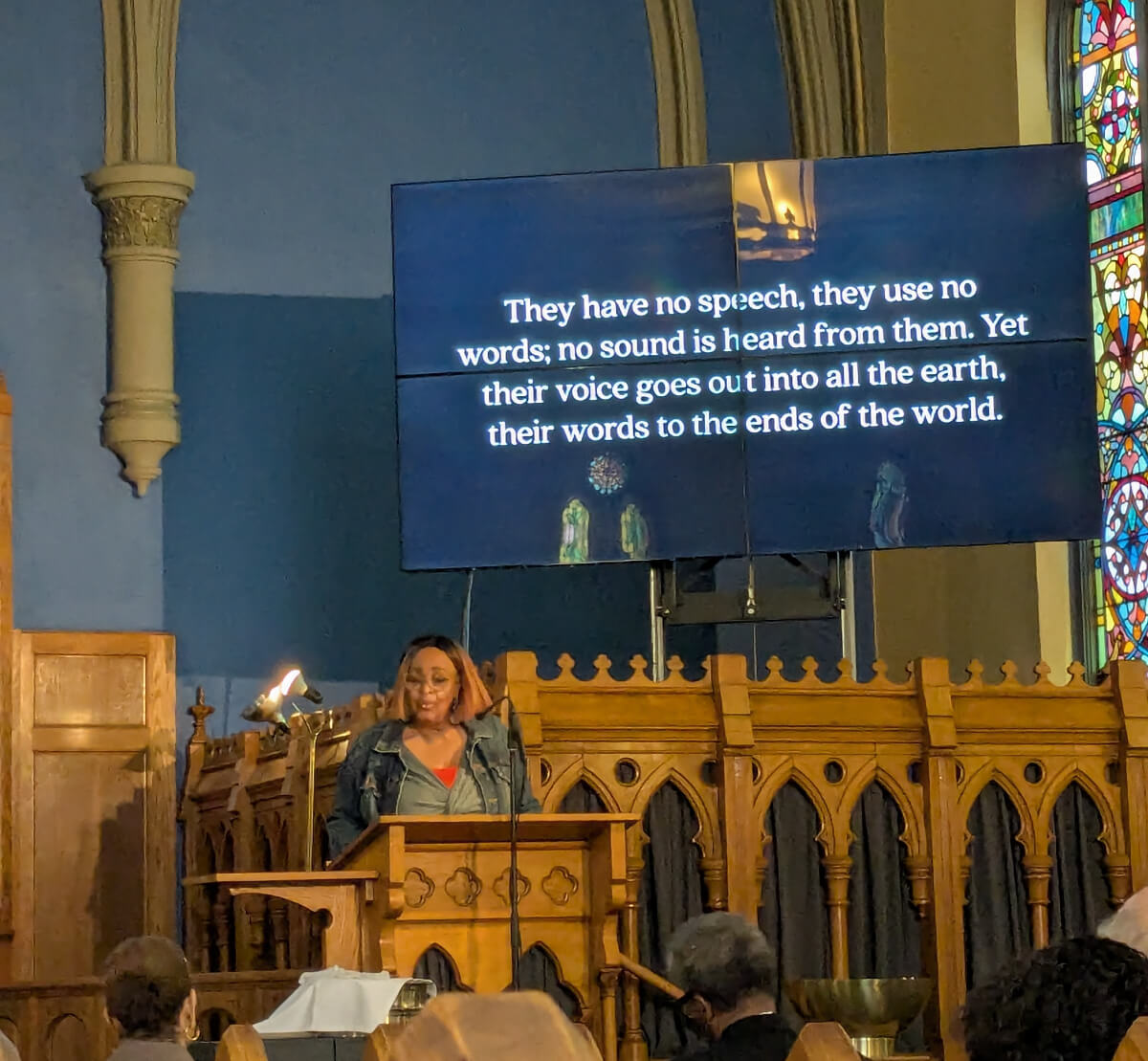
Earth Day Service at LaSalle Street Church, Chicago, IL.
What keeps you going when faced with all our overwhelming ecological problems?
It helps to know I’m not alone, and that there is an army of unsung heroes who are just regular people showing up faithfully for the places they love in whatever ways they can. I recently came across this quote in the book Human Nature by Kate Marvel, which captures this sentiment:
“…for the growing good of the world is partly dependent on unhistoric acts; and that things are not so ill with you and me as they might have been, is half owing to the number who lived faithfully a hidden life, and rest in unvisited tombs.”
– George Eliot, Middlemarch
What is a little-known but fun fact about you?
When I moved from China to the United States as a three-year-old, my parents almost gave me the English name Nancy. Instead they transliterated my Chinese name, 柳岸, which means “willow tree by the river” to Liuan. I would have liked the English name Willow, but definitely not Nancy.
What would be your creation-oriented book recommendation?
It’s not very original, but I love Robin Wall Kimmerer’s book Braiding Sweetgrass and find myself constantly referring back to it, even years later. I finally had to get my own copy instead of checking out the library copy over and over!
What is your favorite creation-oriented song?
“Latinoamérica” by Calle 13 channels the grit, power, and truth-telling of marginalized communities who have had their lands and human rights to clean water, soil, and air violated by powerful men and multinational companies who prioritize the bottom line over humanity and creation’s dignity.